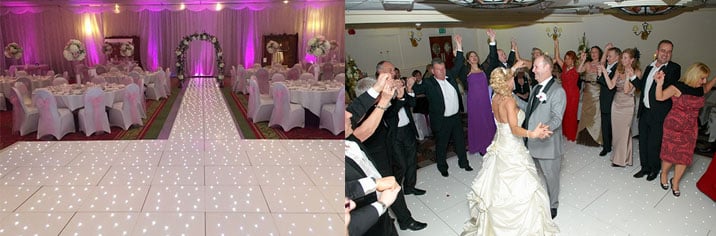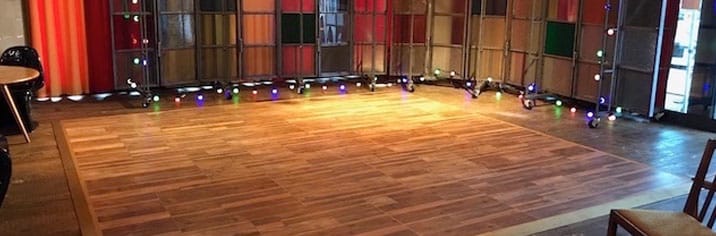

Dance floor hire in Yorkshire typically costs from around £145 up to £1,100 or more, depending on the size, floor type and whether delivery and professional installation are included. The main options are parquet, gloss white, LED/starlit and mirrored, ranging from 12ft x 12ft for smaller parties up to 20ft x 20ft and beyond for larger receptions. This guide covers what each floor type actually looks like inside a real venue, how to size it correctly for your guest list, what Yorkshire-wide prices look like in 2026, and the practical site requirements that suppliers don’t always mention until installation day.
One thing worth knowing before you go further: the most striking wedding receptions tend to treat the dance floor and venue lighting as a single decision, not two separate hires. When you plan both together, the finished result feels cohesive rather than assembled from separate suppliers. More on that shortly.
Key takeaways
- Budget from the start: All-in Yorkshire hire prices range from around £145 for a 12ft x 12ft parquet floor to £1,100+ for a large LED floor, including delivery and installation.
- Size to your guest count: Use the 30–40% rule (not everyone dances at once) and work up from there based on your venue layout.
- Book early for summer: Peak Saturdays from May to September book up fast; aim for 9–12 months ahead, or 12–18 months for specialist floors.
- Floor and lighting work together: Your floor surface and lighting design affect each other; choosing them separately often produces a disconnected result.
- Sort site prep before installation day: Many marquee and grass installations require a levelled, moisture-protected subfloor, always confirm the ground requirements with your supplier, as some portable systems can sit directly on firm, dry, level grass.
- Get an itemised quote: Always confirm what’s included: VAT, delivery, collection, stairs, outdoor subflooring and late-night access can all affect the final price.
Which type of dance floor suits your wedding style?
Yorkshire suppliers offer four main categories of hire floor, and the right choice depends almost entirely on your venue aesthetic and the atmosphere you want to create. Picking the wrong one for your setting is a bit like choosing the wrong frame for a painting: technically functional, but slightly off.
Parquet and wooden floors
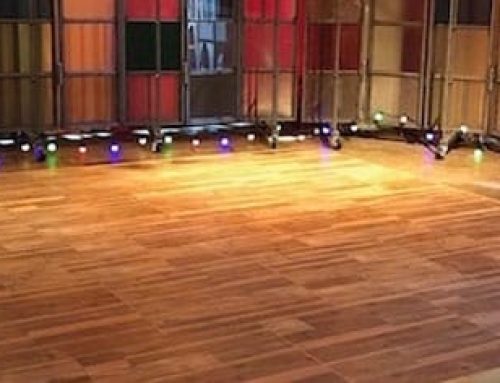
Parquet is the classic choice for barn conversions, country houses and heritage venues across Yorkshire. The warm, honeyed tones of real timber photograph beautifully, feel solid underfoot, and suit live bands particularly well because wood gives a different acoustic quality from synthetic surfaces. The trade-off is weight and installation time: parquet needs a firm, completely level base, and in marquee settings the ground usually requires boarding before the floor goes down. If your venue is rustic or traditional, this is where to start.
Gloss white, chequered and vinyl floors
Gloss white is the workhorse of the marquee wedding circuit, and for good reason. It’s more affordable than timber, quick to install, and reflects light in a way that makes the whole space feel brighter. Chequered vinyl has a classic party energy but reads as less premium than real wood; under well-designed lighting, though, it looks far better than you’d expect. White gloss can show scuffs and marks, so it needs a completely clean, flat base and a little care from guests.
LED and starlit floors as a centrepiece
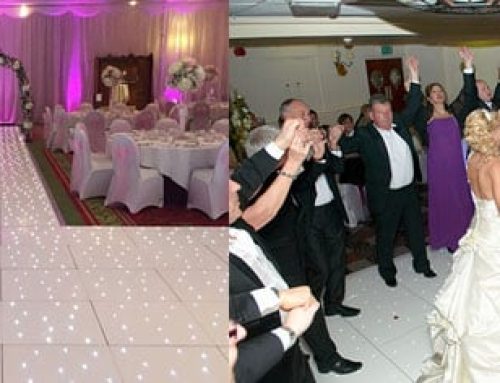
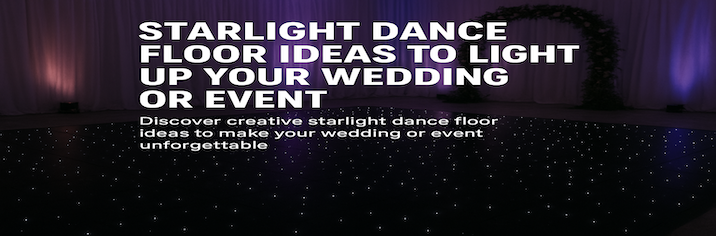
A starlit floor creates a subtle twinkling effect across a white or dark surface, romantic and elegant, and best suited to first dances and formal moments. A full LED floor is something else entirely. Programmable colours, animated patterns, monogram displays and music-synchronised effects make it a genuine centrepiece rather than just a surface to dance on. The cost is higher and the power requirements more demanding, but the impact on evening photography is significant. LED floors in particular often need a boarded base and dedicated power planning, so discuss these requirements with your supplier early. Pair the floor with matching venue lighting and the overall result is hard to beat.
Types of dance floor hire in Yorkshire: what size do you actually need?
The standard industry rule is to assume around 30–40% of guests on the floor at any one time, and to allow roughly 0.4–0.5 m² per dancer. That translates into the following starting points for Yorkshire receptions.
The rough guide to guest numbers and floor size
As a general planning guide, a 12ft x 12ft floor is typically suited to receptions of around 50–80 guests; a 16ft x 16ft works well for roughly 120–160 guests; and a 20ft x 20ft is more appropriate for larger receptions of 160 or more. These figures are based on the 30–40% dancing assumption and approximately 0.4–0.5 m² per dancer. If you’re planning a ceilidh, expecting a particularly lively crowd, or need space for live performers, move up a size. Treat these as planning ranges rather than hard limits.
Fitting the floor around your venue layout
Guest count is only part of the equation. The DJ or band footprint, bar queue routes, table proximity and walkway widths all affect how a floor actually feels on the night. A floor that looks generously sized on a layout plan can feel cramped once the room fills with people. Always share your venue floor plan with your supplier and ask them to sense-check the size before you confirm the booking.
How much does dance floor hire in Yorkshire cost?
The table below reflects realistic mid-market Yorkshire prices for 2026, based on supplier pricing data, including delivery, professional installation and collection. Individual quotes will vary by supplier and season, but these figures give you a solid baseline for comparison.
| Floor size | Parquet / wooden | Gloss white / standard | LED or starlit |
|---|---|---|---|
| 12ft x 12ft | £145–£250 | £250–£350 | £350–£450 |
| 16ft x 16ft | £250–£350 | £300–£450 | £550–£700 |
| 20ft x 20ft | £400–£550 | £350–£550 | £850–£1,100+ |
What’s included in most hire quotes (and what isn’t)
Many reputable suppliers include delivery and professional installation in their quotes, but always confirm this is the case before signing anything, a price that looks unusually low may be a hire-only figure with transport charged separately. What varies between suppliers includes VAT treatment, charges for stairs or long carries, outdoor subflooring and late-night collection. Travel surcharges for venues outside the supplier’s core area are also common.
Always request an itemised quote. Check whether the deposit is a non-refundable booking deposit, a refundable damage deposit, or both, because the answer is sometimes neither, and it matters when comparing total costs.
How does your dance floor work with your venue lighting?
This is the section most dance floor guides skip. Your floor surface and your lighting are not independent choices, each one affects how the other looks on the night, and it’s arguably the most useful thing to understand before you start requesting quotes.
Why your floor surface and your lighting are one decision
A white LED floor under warm amber uplighting looks stunning. The same floor under poorly placed cool spotlights looks clinical and a little cold. Parquet under festoon lighting feels genuinely romantic; parquet under flat, bright house lighting looks like a village hall. The floor and the lighting affect each other, which means selecting them independently from different suppliers often produces a result that looks fine in isolation but slightly disconnected when you stand in the room on the night.
Uplighting placed around the room’s perimeter visually frames the dance floor and draws guests towards it. Warm white or amber tones emphasise the natural grain of parquet and feel intimate; soft pastel tones on a white floor feel romantic. The key is that someone needs to plan both at the same time, not retrofit one around the other.
Why a combined lighting and dance floor package changes the result
Some Yorkshire suppliers, including Wedding Venue Lighting (Yorkshire), manage both the floor hire and the full venue lighting design as a single, fully managed service. That means one site visit, one installation team, one point of contact on the day, and a layout where the floor and lighting are planned together from the start rather than bolted together at the last minute. For couples who want the finished look to feel intentional, not assembled from separate suppliers, it’s worth asking about a combined package when you compare quotes. Many photographers and couples notice the difference every time they look back at the photographs.
What does your venue need before the floor goes in?
Most couples don’t think about site preparation until the supplier asks about it. Being prepared avoids surprises on installation day, particularly for marquee and outdoor events.
Marquee and outdoor site preparation for dancefloor rental in Yorkshire
Some portable interlocking dance floor systems can be installed directly on firm, dry, level grass, but soft, wet, sloping or uneven ground generally requires a rigid subfloor, a moisture barrier and sometimes levelling with sand or compacted fill first. Always confirm the specific ground requirements with your supplier well in advance, as practices vary. Mow the area, remove any debris, stones or sharp objects, and avoid sites that drain poorly. Ask about ground requirements well before installation day, not on the morning of it.
Indoor venue requirements
Hard floors, concrete and level pavers are usually straightforward if clean and flat. The common issues indoors are lip heights between different flooring surfaces (a genuine trip hazard for guests in heels), access routes for the panels, and whether the venue allows fixings or adhesive. Always share a venue floor plan with your supplier before confirming the booking, and check what access time they need. A good supplier will flag any issues during the planning stage; a less experienced one will flag them when the van arrives.
Key questions to ask before you confirm a dance floor hire booking in Yorkshire
Peak summer Saturdays in Yorkshire, particularly between May and September, across venues from Leeds and Harrogate to Sheffield and York, book up quickly. Book 9–12 months ahead for a standard floor; 12–18 months for a specialist LED, starlit or bespoke option. Most Yorkshire suppliers ask for a 25–50% non-refundable booking deposit upfront, with the balance due around 28–30 days before the event. Cancellation charges typically escalate as the date approaches: within 90–120 days you may owe 50% of the total; within 14 days, the full amount is often payable. A separate refundable damage deposit of around £100 is common and returned after inspection.
Before confirming any dance floor hire in Yorkshire, get clear written answers to the following:
- Does the quote include VAT, delivery, installation and collection?
- Who installs the floor, and how long does it take?
- What are the site preparation requirements for your specific venue?
- Is a subfloor needed outdoors, and is that included in the price?
- What is the cancellation policy, and what constitutes a damage deposit versus a booking deposit?
- Can they coordinate with your lighting supplier, or do they offer both as a combined service?
Making the right choice for your reception
The decision comes down to four things: match the floor type to your venue’s style, size it correctly using your guest count and layout together, confirm your budget with an itemised quote that includes everything, and sort site preparation before the installation team arrives. Get those four right and the practical side largely takes care of itself.
The broader point is worth stating plainly: the dance floor is the heart of your evening reception. It’s where the first dance happens, where the room comes alive and where guests later remember the night feeling. Treating it as an afterthought, or hiring it separately from your venue lighting without thinking about how the two interact, is the most common way couples end up with a reception that looks slightly less considered than it could have been.
If that sounds like the right approach for your day, get in touch with the team at Wedding Venue Lighting (Yorkshire). We cover venues across North, West, East and South Yorkshire, from barn conversions and country houses to marquees in Bradford, Harrogate, Leeds, Sheffield and York, and we handle everything from the initial site visit through to packing down at the end of the night. It’s the kind of thing you notice every time you look at the photographs.
Frequently Asked Questions
Do LED and starlit floors need special power arrangements?
Yes, LED floors typically need dedicated power planning because their requirements are more demanding than standard floors. I advise discussing power and any boarding needs with your supplier early so the venue can provide suitable access and supply on the night.
If we plan a ceilidh or a very lively crowd, should we choose a different floor size?
Yes, you should move up a size for a ceilidh or a particularly lively crowd because more space will be needed. I base sizing on the 30–40% dancing assumption and roughly 0.4–0.5 m² per dancer, so increase your chosen floor accordingly to avoid feeling cramped.
What area of Yorkshire does Wedding Venue Lighting (Yorkshire) cover?
Wedding Venue Lighting (Yorkshire) covers venues across North, West, East and South Yorkshire, including Bradford, Harrogate, Leeds, Sheffield and York. I offer a fully managed service from site visit through to pack down for those areas.